


Decoding the History Recorded in Lunar Soil
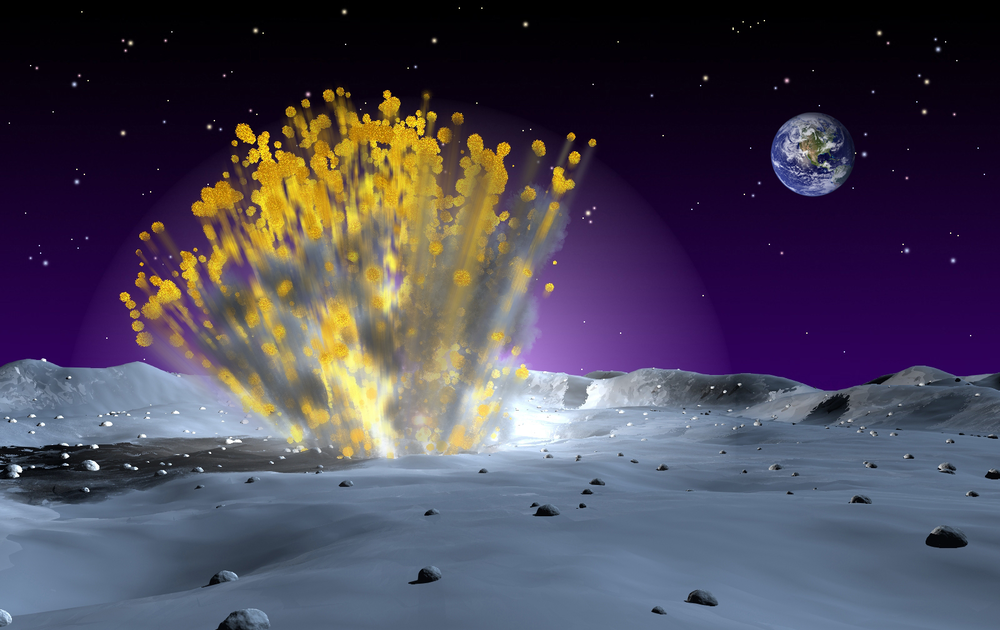

The Moon’s soil preserves signatures of the solar wind, cosmic rays, and episodic stellar events, but frequent meteorite strikes scramble what would otherwise be a neatly layered record of cosmic history. Researchers have now developed a mathematical model that accounts for this scrambling effect in lunar soil [1]. The model can predict the depths and concentrations of radioactive isotopes originating from astrophysical events hundreds of light-years away. It provides a guide for future lunar sampling missions that will search for evidence of specific events in our Solar System’s history.
Samples returned from the Apollo missions suggest that irradiation and the solar wind alter the lunar surface soil’s chemistry and physical appearance as it ages. In addition, nearby supernovae emit radioactive isotopes, including short-lived ones such as iron-60. Meanwhile, meteorite impacts mix all this surface material and gradually transport it deep into the soil or upward from below in a process known as impact gardening. But models of this transport often fail to capture key features observed in the Apollo samples. For example, analysis of core samples (long, vertical cylinders of soil) suggest that, in some cases, the concentrations of certain isotopes have much steeper depth dependence than models predict.
These models typically assume that gardening causes material to simply diffuse up and down over time, and they don’t account for the specific impact processes that lead to this motion. Emily Costello, a geophysicist at the University of Hawaii, and her colleagues framed gardening as a competition between the processes that send material downward, such as burial under the debris blasted out of an impact crater, and those that bring material upward, such as excavation by an impact.
The team derived an equation that, given an initial amount of surface material, describes its evolution over time as it moves up or down within a column of soil. The equation can describe very different kinds of inputs at the surface: continuous weathering of soil, a steady trickle of cosmic-ray produced isotopes, or a brief pulse of supernova debris.
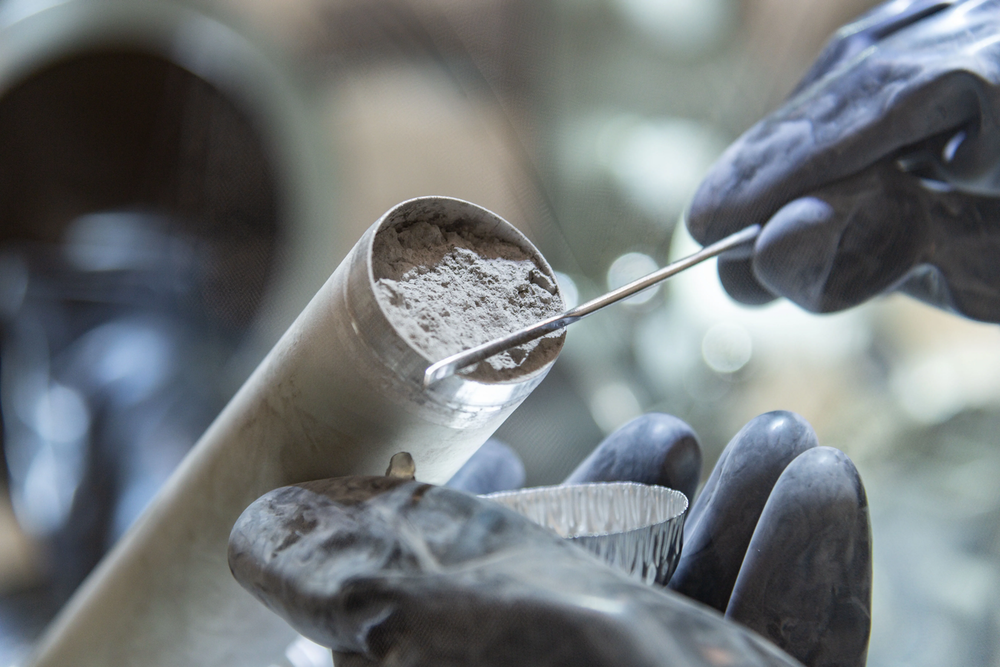
To test their model, the researchers first calculated soil maturity profiles (soil age versus depth) to compare with measurements of core samples from Apollo missions at several locations on the Moon’s surface. The model accurately reproduced profiles across soil cores whose ages ranged from 14 to 450 million years. According to Costello, that agreement indicates that the model works over geologic timescales.
In a second test, the researchers compared model predictions with iron-60 depth profiles measured in four Apollo samples. Starting with the nearby supernovae documented in Earth’s geologic record, roughly 2.3 and 7.3 million years ago, they predicted how gardening and radioactive decay should have redistributed supernova-deposited iron-60. The calculation required including both an episodic source and radioactive decay. The model accurately predicted the depth-concentration profiles for all the Apollo locations.
Costello and her colleagues next used their model to predict the depth dependence of isotopes that have not yet been detected on the Moon. The depth profile depends on how they were deposited. For example, planetary scientists believe that plutonium-244 found in the Solar System may have originated either from several distinct supernova events or from a period of continuous influx. The new model shows that these two scenarios yield distinct plutonium-244 profiles in the top 100 cm of lunar soils, so future lunar samples could potentially reveal the source.
Rebecca Ghent, a lunar scientist at the Planetary Science Institute in Oregon, finds it fascinating that although gardening is an inherently stochastic process, a uniform smearing of materials throughout the column is not inevitable. Instead, the study shows that it’s possible to gain information about the provenance of extra-lunar materials on the basis of their distribution in lunar soil. “Using lunar and terrestrial records together provides a powerful constraint on space-based events that affect the Earth–Moon system,” she says.
The work provides motivation for NASA’s upcoming Artemis mission to the Moon’s South Pole. Finding plutonium-244 in deep core samples may allow researchers to determine the source of the isotope by comparing high-latitude samples with midlatitude ones. The comparison will allow them to test whether supernova debris arrived from a specific direction or whether it came from multiple directions because of interactions with interstellar magnetic fields.
While Earth’s deposits only trace interstellar debris back 10 million years, lunar soil acts as a much longer-term archive because the Moon lacks plate tectonics. By correctly interpreting soil profiles, Costello says, “we can trace the Solar System’s path through the Galaxy and resolve fundamental mysteries about the origins of heavy elements in the Universe.”
–Rachel Berkowitz
Rachel Berkowitz is a Corresponding Editor for Physics Magazine based in Vancouver, Canada.
References
- E. S. Costello et al., “Gardening on the Moon: An advection-diffusion model to guide the search for supernova debris in the lunar regolith,” Phys. Rev. Lett. 137, 071005 (2026).